The operations layer of your business.

Production-ready custom tools and AI automations. Maintained for life.

artivex@scope ~
v1

What's the most painful operational problem you have right now?

--model=auto
MCP endpoint on every build · Claude, ChatGPT, Cursor can operate it
Explore
Not sure where to start? Try one of these
Ask
Build
How it works

From idea to running software.
Six steps. No code thrown over the wall.

Every Artivex build follows the same pipeline. AI plans, a deterministic engine ships. The platform owns the runtime so you don't have to.

01

Describe

Two modes. Prompt for one-shot — describe the system, get a build. Agent for conversational scoping — the AI asks questions, you answer, scope locks together.

Plain English. No technical wording.

02

AppSpec — source of truth

The AI turns your description into a structured JSON blueprint. Every entity, field, workflow, AI step, integration, and dependency mapped and machine-readable. The AppSpec is the system. Code is generated from it, never the other way around.

A spec, not generated code.

03

Compile — deterministic engine

The engine compiles the AppSpec into a working system. Same spec, same output, every time. No regenerated code on every change, no drift, no broken upgrades. The engine is what AI builders don't have.

Deterministic, not vibes.

04

Preview — try it free

Real working system in your browser. Click through it, run the workflows, hit the API, test the AI steps with real data. Free until you activate. If it isn't right, refine the prompt and regenerate.

No credit card. No commitment.

05

Safe changes — chat-edit + diff

Edit the system in plain language: "add a priority field to leads, send Slack alerts when high-priority leads come in." The AI proposes a diff. The dependency graph calculates blast radius. You preview the change, see what breaks, acknowledge, apply. Every version is rollback-able in one click.

Nothing breaks silently.

06

Monitor — plain-language alerts

Every deployed system is health-monitored. Per-workflow failure rates, uptime, integration status. Alerts arrive in plain language: "Your invoice approval workflow failed 8 times in the last hour because the Stripe API key was rotated." You know about a problem before your customer does.

Built-in. No setup.

Why it works

Seven things no other AI builder does.

Most AI-built software fails because the AI guesses every time. Artivex is built on structured infrastructure, every build runs on the same seven technical foundations that make the difference between a demo and a production system.

01 / APPSPEC

Your system lives in a spec, not someone's head

Every build is defined as a structured blueprint, every entity, field, workflow, integration, and dependency mapped and machine-readable. When people leave, the knowledge stays.

Most internal tools live in someone's head. Ours live in a spec.

Layered glass blueprint showing the AppSpec, a structured, machine-readable definition of an Artivex system
02 / CHANGE SAFETY

No change reaches production without your sign-off

A live dependency graph tracks every entity, field, workflow, and integration. Before any change is applied, it calculates the blast radius, exactly what would be affected and why. Breaking changes are gated behind explicit acknowledgment, and rollback is one click if something slips through.

Most tools push changes and hope. We show you exactly what will break, and make you acknowledge it.

Safe-change interface showing breaking-change warnings and an Acknowledge button before changes are applied to a production system
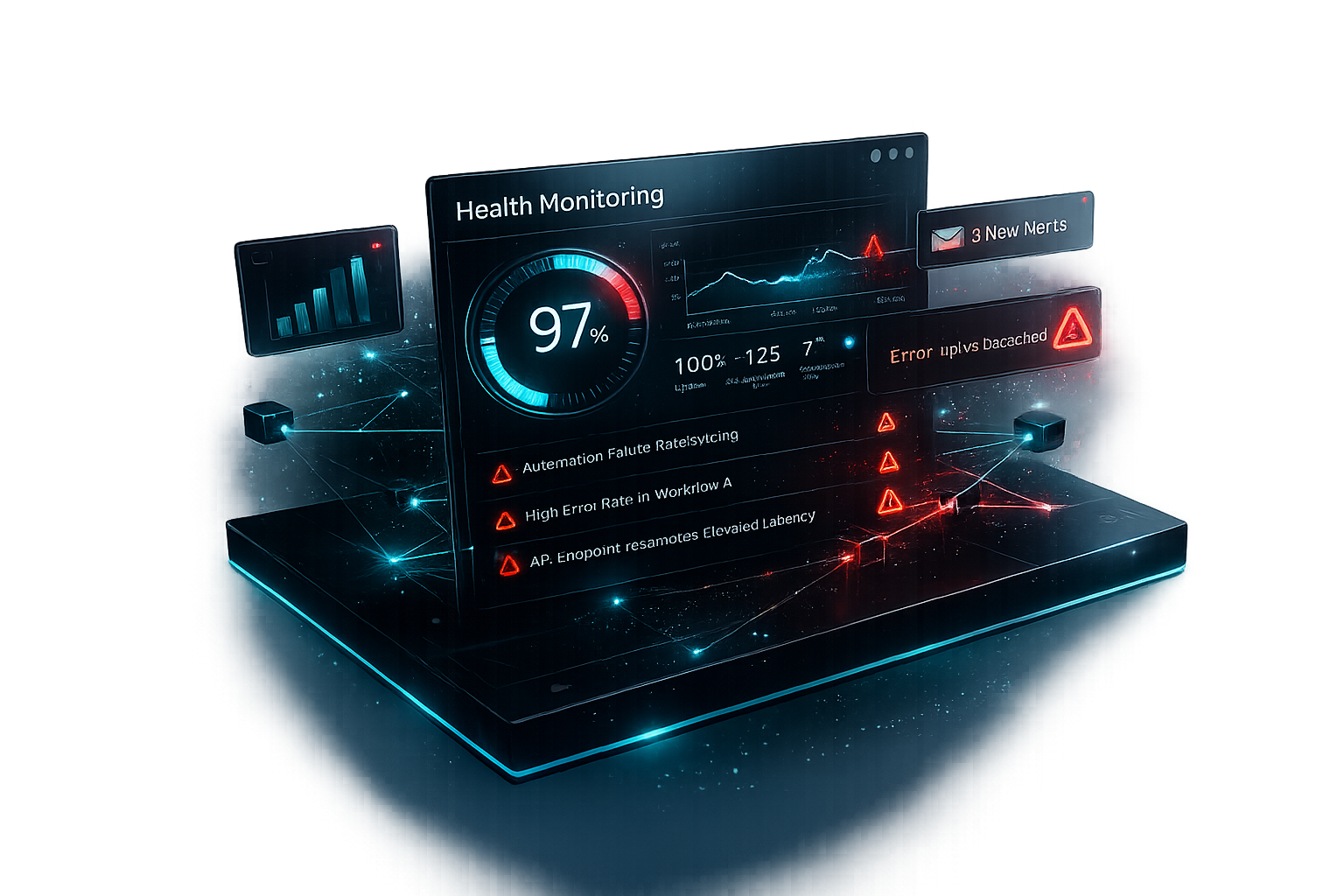
03 / HEALTH MONITORING

When something goes wrong, we tell you what and why

Uptime monitoring on every deployed system, plus per-automation failure rates, spike detection, and plain-language alerts. Issues surface before they reach you, and explain themselves, so you know what to do next.

The platform watches itself, and tells you what's wrong, not just that something is.

Health monitoring dashboard with uptime gauge, alerts panel, and per-automation failure rate tracking for deployed Artivex systems
04 / PREVIEW BEFORE PAY

See it working before you pay a cent

Every build ships with a free preview, real software, real workflows, running in your browser. The free tier gives you 100 credits to generate one system and feel how it works. When you're ready for production deploy, custom domains, and unlimited builds, pick a paid plan.

Nobody else shows you the finished system before taking your money. We think that's backwards.

Half-revealed system showing Artivex preview-before-pay, see your custom software working with real data before activating production
05 / REST API + SDK

Every system is a headless backend you own

Every build ships with a documented REST API, an OpenAPI spec, and a typed TypeScript SDK. Keep our auto-generated UI, or plug in your own React, Vue, or mobile frontend. Your backend, your data, fully accessible.

Most platforms lock you into their UI. Ours gives you the backend and lets you build on top.

REST API panel with OpenAPI spec, TypeScript SDK, and React, Vue, and mobile clients connecting to an Artivex headless backend
06 / PER-APP MCP

Your AI assistant operates your system directly

Every system ships with its own MCP endpoint. Point Claude, ChatGPT, Cursor, or any MCP client at your CRM or internal tool. Your AI reads data, creates records, triggers workflows, and checks dependencies, with scoped permissions and a full audit trail.

No other platform ships AI-operable systems. We ship nothing else.

AI assistant connected via MCP endpoint to an Artivex system, operating entities and workflows directly with scoped permissions
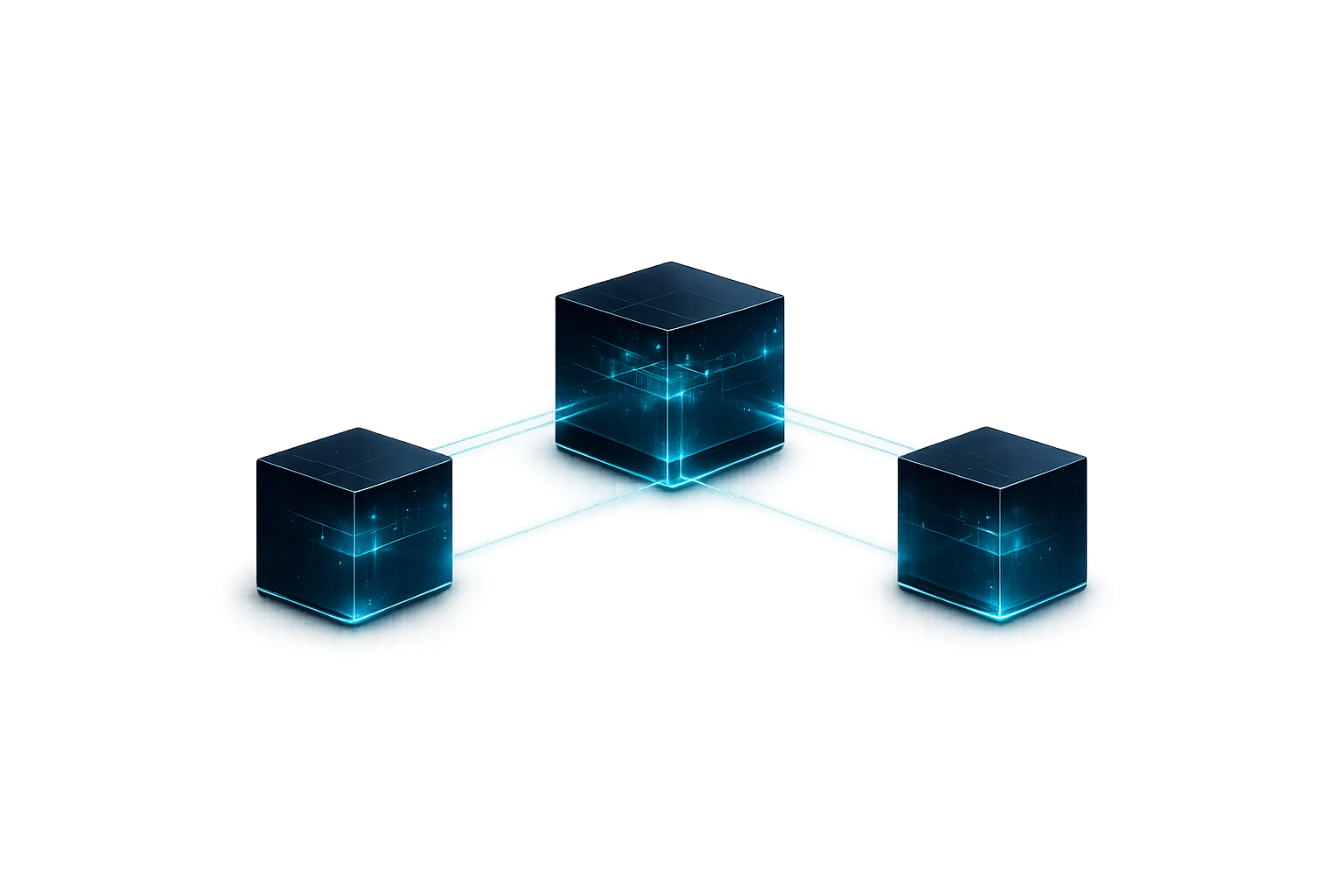
07 / COMPOSABLE TOOLS

Build focused tools that talk to each other

Every Artivex tool ships with a REST API, webhook endpoints, and scoped auth tokens. A deal closed in your CRM triggers a project in your tracker, which triggers an invoice in your billing tool. Three focused systems, maintained together, wired in minutes. No Zapier, no duct tape.

Most platforms force a choice: one bloated mega-tool, or separate tools stitched together with brittle automations. We give you neither.

Three composable Artivex tools connected by glowing teal lines, a CRM card, a central Projects cube, and an Invoices block, illustrating how separate focused systems built on Artivex talk to each other via webhooks and APIs
What we replace

Replace the stack. Keep what works.

Artivex replaces the operational tools running your business. The 5–8 SaaS subscriptions that hold your CRM, ops, invoicing, approvals, reporting, and automations. Email, accounting, video, and payments stay where they are.

Replace with Artivex

One system, your data, you own it. Built around how your business actually runs, not generic templates.

  • CRMHubSpot · Pipedrive · Copper · Notion-as-CRM
  • Project + ops trackersAsana · Monday · Trello · Notion databases
  • Invoicing + quotingFreshBooks invoicing · PandaDoc · manual PDF flows
  • Approvals + expensesApprovalMax · Pleo workflows · expense spreadsheets
  • Lightweight support / ticketingZendesk Lite · Help Scout for small teams · email queues
  • Reporting + dashboardsGoogle Sheets · Looker Studio · Airtable views
  • Workflow automationZapier · Make · n8n (self-managed)
  • Customer portals + intake formsTypeform-as-portal · custom-coded one-offs
Keep what works

Standardised, regulated, or commodity tools you already pay for. We integrate with these, we don't try to replace them.

  • Email + calendarGmail · Outlook · Google Calendar
  • AccountingXero · QuickBooks · Fortnox · Visma
  • Video callsZoom · Google Meet · Teams
  • Team commsSlack · Microsoft Teams
  • Payments coreStripe · PayPal · Klarna
  • Design toolingFigma · Canva · Adobe
  • Marketing site / blogWebflow · Framer · WordPress
  • Code editors + dev toolsVS Code · GitHub · Cursor

Replacing tools isn't the goal. Owning the operational layer of your business is. Most ICP founders carry $1,500–2,500/mo across the left column. Artivex starts at $59/mo. Math works at every tier.

Pricing

Eight tools become one. Same work, fraction of the cost.

The average ICP founder pays $1,500–2,500/mo across the operational stack we replace. Artivex Builder is $199/mo flat. Free tier included, no credit card. Every paid plan uses one credit currency, no hidden meters, no surprise bills.

Free
$0
Try one preview · No credit card
  • 1 build, preview only
  • 100 credits per month
  • Cheap-tier AI models
  • MCP endpoint on the preview
  • Default subdomain only
Start free →
Starter
$59/mo
Founders shipping their first systems
  • Unlimited builds
  • 800 credits per month
  • Sonnet-class AI on everything you see
  • Custom domain on every build
  • Production deploy · REST API · MCP
Start free →
Builder
$199/mo
Growing teams · multiple systems running
  • Unlimited builds
  • 3,000 credits per month
  • Sonnet default · Opus opt-in per step
  • Custom domain on every build
  • Priority email support
Start free →
Studio
$499/mo
Production workloads · agencies
  • Unlimited builds
  • 8,500 credits per month
  • All models · Opus on demand
  • Custom domain on every build
  • Priority support · direct line to David
Start free →
Scale
$999/mo
Power users · 10+ builds in production
  • Unlimited builds
  • 20,000 credits per month
  • All models · Opus on demand
  • Auto-refill on by default · 2 refills/mo cap
  • Priority support · direct line to David
Start free →
Enterprise
Custom
100+ builds · 50,000+ credits/mo
  • Custom credit allocation
  • Annual contracts · custom SLA
  • Dedicated Slack channel
  • Team seats · SSO · RBAC (V2)
  • Bring your own API keys (BYOK)
  • Volume pricing
Contact us →
// Credits are the only currency. Generate a system (30 credits), edit it (0.5), run an AI step (0.2), execute an automation (0.02). Unlimited builds on every paid tier. Credits pace your usage. Need more? Top-up bundles: 500/$49, 2,000/$169, 5,000/$379, always priced above your tier rate. Tier up to save, top-up only for spikes. Auto-refill available on every paid tier (off by default on Starter/Builder/Studio, on by default on Scale, monthly cap configurable). Annual billing saves 17%: $590 / $1,990 / $4,990 / $9,990 per year for Starter / Builder / Studio / Scale (two months free).
MCP · AI-native backend

Every system ships with an MCP endpoint. Your AI operates it directly.

Every system you build on Artivex gets its own MCP endpoint, the open standard for AI-to-tool communication. Point Claude, ChatGPT, Cursor, or any MCP-compatible client at your CRM, dashboard, or internal tool. Your AI reads the data, writes to it, triggers workflows, and checks dependencies before changing anything. Scoped permissions. Full audit trail. Kill switch if you need it.

01 · Query

"Which deals stalled in the last two weeks?"

Your AI reads your CRM directly, no dashboard, no export. Ask in plain language, get the answer from live data.

02 · Operate

"Move all leads from cold to nurture and trigger the follow-up sequence"

Your AI writes to your system, updates records, triggers workflows, and logs every action with a full audit trail.

03 · Change safely

"Add a renewal_date field to the Client entity"

AI checks the dependency graph first, shows what would be affected, and only applies after you approve. Same safe-change architecture your team uses.

04 · Monitor

"How's the onboarding system doing this week?"

AI pulls health scores, execution logs, and failure summaries, explained in plain English, not metrics you have to interpret.

Works with every AI client, now and next

MCP is an open standard. Claude Desktop, ChatGPT, Cursor, Windsurf, Cline, Zed, every MCP-compatible client works with your Artivex systems on day one. Scoped tokens with read-only or read-write permissions per entity. Every AI action logged. One-click kill switch to revoke all AI access.

npm install @artivex/mcp-server
FAQ

Questions we actually get asked.

How does the free trial work?

Sign up for free, no credit card. Describe what you need, and Artivex generates a working preview in your browser. The free tier is strictly for evaluation: 1 build, preview only, 100 credits per month, cheap-tier AI models. Enough to generate one system and feel how it works. When you're ready for unlimited builds, custom domains, Sonnet-class models, and production deploy, pick a paid plan.

How is this different from Lovable or Bolt?

Lovable and Bolt generate code for technical people who want to build their own software. Artivex is a self-serve platform for businesses that need custom internal tools without hiring developers. The platform builds it, hosts it, monitors it, and maintains it forever. They end at day one. Artivex starts there.

How is this different from Retool, Airtable, or n8n?

Retool is a builder for developers — you drag, drop, and write JavaScript. Powerful, but you need someone technical on every change. Artivex generates the system from a description and edits it through chat. No JavaScript required.

Airtable is a database with a UI on top — fast for tracking, slow when you need workflows, AI steps, multi-step automations, or a real backend. Artivex is a full system: entities, fields, workflows, AI steps, integrations, REST API, MCP, all generated together.

n8n connects tools but doesn't own the system around them. When the workflow breaks, nobody notices until something downstream fails. Artivex tracks every dependency, alerts on failure with plain-language explanations, and shows blast radius before a change ships.

Different problem in each case. Artivex is for founders who want a real system, generated and maintained, not a builder, a spreadsheet, or a glue tool.

Where is my data stored? Is this GDPR-compliant?

EU by default. Data sits in Supabase EU-Frankfurt with row-level security and tenant isolation at the database layer. Artivex is operated by Corners Sverige AB, a Swedish company subject to EU data protection law.

You get a full Data Processing Agreement on signup, GDPR-compliant by architecture (data minimisation, encryption at rest, audit trail, right to erasure within 30 days of cancellation). Full subprocessor list is published, with 30-day notice on material changes.

For customers with EU-only requirements, an EU-only AI mode routes all AI steps through Mistral (Paris) instead of US providers — opt-in per workspace.

What makes Artivex "production-ready"?

Three things, stacked.

One: every system ships with the infrastructure layer most AI-built tools skip — multi-tenant isolation, structured AppSpec, dependency-aware change management, audit logging, and rollback. The boring layer that decides whether software survives past month one.

Two: every AI step has cost caps, retry policies, fallback providers, and confidence-based routing to a human review queue. Not a prompt fired into the void. Production AI behaves like infrastructure, not magic.

Three: the platform operates the runtime 24/7 — uptime monitoring, error alerting, auto-rollback on regressions. Your tool is built like production software, not a demo.

Won't AI-generated software just create technical debt?

True for most AI builders. Not for Artivex, and the difference is structural.

Tools like Lovable and Bolt ship you generated code and walk away. You own it. You maintain it. You patch React when the next version ships. Code accumulates debt by nature, hidden coupling, stale patterns, dead files nobody touches.

Artivex is different. Every system is defined by a structured AppSpec, a machine-readable blueprint. Code is generated from the AppSpec and maintained by the platform, not by you. Your artifact is the AppSpec. The code is ours to handle.

Three mechanisms prevent the usual debt vectors:

  • Live dependency map exposes every relationship, no hidden coupling
  • Preview-before-apply shows blast radius before any change ships, no silent breakage
  • Platform updates are one click away, no manual migration, no merge conflicts, no dependency hell

The one source of debt we can't fully prevent is you designing your own entity model badly. Even then, we flag complexity and circular patterns automatically. Technical debt is what you inherit from tools that ship and disappear. Artivex ships and stays.

What does "maintained for life" actually mean?

When you build on Artivex, you don't own a frozen codebase that will rot in 18 months. The platform owns the runtime — workflow engine, AI step framework, dependency map, monitoring, security patches.

When Anthropic ships Claude 5, we update the AI step framework. When Postgres ships a security patch, we apply it. When Slack changes its API, we handle the migration. You never get an email saying "your integration broke, please update."

For the lifetime of your Artivex account, your system stays in working order — we maintain the floor, you focus on your business logic. The maintenance promise is the entire reason this platform exists.

What can't you build?

Artivex is for production-grade internal tools and AI automations — custom systems that run a business internally and need to keep working for years. That includes client portals, member dashboards, and anything with logged-in users tied to your operations. That's the sweet spot, and it's where we're genuinely great.

We're not the right choice for:

  • Marketing websites or landing pages (use Webflow, Framer, or Wix)
  • Native mobile apps (iOS/Android), we build web-first systems
  • Consumer SaaS products at scale (multi-tenant billing, plan tiers, coming in V2)
  • Games, 3D experiences, or anything requiring a custom game engine
  • Hardware or embedded software
  • Throwaway prototyping with no maintenance commitment — for that, Lovable or Bolt are faster

If you're unsure whether your idea fits, book a 30-minute strategy call. If it's out of scope, we'll tell you honestly and point you to a better tool.

What counts as a "build"?

A build is one complete internal tool, a CRM, a client tracker, a reporting dashboard, an approval workflow. Each build is its own system with its own data, workflows, and interface. Free gives you 1 preview build for evaluation. Every paid tier gets unlimited builds. Credits pace your usage, not build count.

What about the usage limits, credits, workflow runs, storage?

Every plan uses credits, one currency for everything. Free includes 100 credits/month. Starter ($59) gives you 800. Builder ($199) gives you 3,000. Studio ($499) gives you 8,500. Scale ($999) gives you 20,000 — for power users running 10+ builds in production. Credits cover generating systems, editing, AI steps, and automation runs.

If you approach your limit, we warn you in-app and by email at 75% and 90%, never a surprise. Need more? Top-up bundles: 500 credits/$49, 2,000/$169, 5,000/$379. Top-ups are priced above any tier's per-credit rate, so the better path is to upgrade one tier. The ladder (Free → Starter → Builder → Studio → Scale) means there's always a clear next step.

What if I'm running 100+ builds or 50,000+ credits/month?

You've outgrown self-serve. Scale ($999/mo, 20,000 credits) covers a lot of ground, but at 100+ active builds or 50,000+ credits per month the right answer isn't a bigger top-up bundle — it's an Enterprise contract.

Enterprise is custom-priced based on your credit volume, includes a dedicated SLA, a direct Slack channel for support, and waits in line for the team primitives shipping in V2 (team seats, SSO, role-based access, folders, centralised billing). Enterprise also supports bring-your-own-key (BYOK) — connect your own Anthropic, OpenAI, or Mistral API keys so AI calls run on your provider contract instead of consuming Artivex credits. Useful for compliance audits, existing volume contracts, or strict data-residency requirements.

Email david@artivex.io with your build count and rough monthly credit estimate. Quote in writing, usually within a day.

What happens when I run out of credits?

Nothing breaks mid-flight. Any automation run already in progress finishes — we don't kill a 5-step workflow on step 3. Once you hit zero, new generates, chat-edits, and new automation runs are paused until you top up or your next billing cycle. A banner shows in-app and we send an email immediately.

Auto-refill keeps you running without interruption. Toggle it on in settings, pick a bundle (500 / 2,000 / 5,000), and set a max-refills-per-month cap so it can't run away. Email confirmation on every refill. Off by default on Starter, Builder, and Studio — we never auto-charge you silently. On by default on Scale (capped at 2 refills/month) because power users running 10+ builds in production can't tolerate workflows pausing.

Pre-emptive warnings fire at 75% and 90% of your limit, in-app and by email, with a projection of when you'll run out at current pace.

What if my build isn't right?

Keep the preview as long as you need. Refine your prompt, regenerate, or start over. You only pay when you activate a build. If you never activate, you never pay.

Can I integrate with HubSpot, Slack, etc?

At launch, every build includes native actions for Slack and email (via Resend), plus inbound and outbound webhooks and HTTP requests for connecting to anything else. That means HubSpot, Notion, Google Sheets, Stripe, or any tool with an API works via webhooks today.

Native integrations for HubSpot, Airtable, Twilio, and more are coming soon. Inbound and outbound webhooks ship in V1, so you can wire most external services today.

Can tools I build talk to each other?

Yes, and it's one of the best ways to use Artivex. Every tool ships with its own REST API, webhook endpoints, and scoped auth tokens. You can build a CRM, a project tracker, and an invoicing tool as separate focused systems, and wire them together so a closed deal creates a project, which creates an invoice.

One Artivex account, composable tools, maintained together. Cleaner than stuffing everything into a single mega-system, and more reliable than Zapier between SaaS apps.

Can Claude / ChatGPT / Cursor operate my system?

Yes. Every system you build on Artivex ships with its own MCP endpoint, the open standard for AI-to-tool communication. Point Claude Desktop, ChatGPT, Cursor, Windsurf, or any MCP client at your system and the AI can query data, create records, trigger workflows, and check dependencies, directly. Scoped tokens control what each AI client can see and do. Full audit trail on every AI-initiated action. One-click kill switch to revoke all AI access instantly.

What happens if I want to leave?

Cancel anytime. On request we hand over a full export of your entity data (CSV and JSON), your AppSpec (the JSON blueprint describing your entities, fields, workflows, and AI steps), and a snapshot of any frontend code we host for you. Together that is the recipe for your system.

What we don't transfer is the Artivex runtime itself — the workflow engine, dependency map, preview system, MCP server, monitoring, multi-tenant infrastructure. That's the platform. Same arrangement as Airtable, Retool, n8n Cloud, Supabase: you own your data and schema, we operate the runtime.

A competent developer can rebuild your system on Postgres plus a workflow runner from the AppSpec in a couple of weeks. You're never locked in. You just lose what you were paying us for.